منتورع العسكري منصة متخصصة في التحليل العسكري والأمني… رؤية دقيقة، معلومات موثوقة، وتغطية شاملة للقوات المسلحة حول العالم.
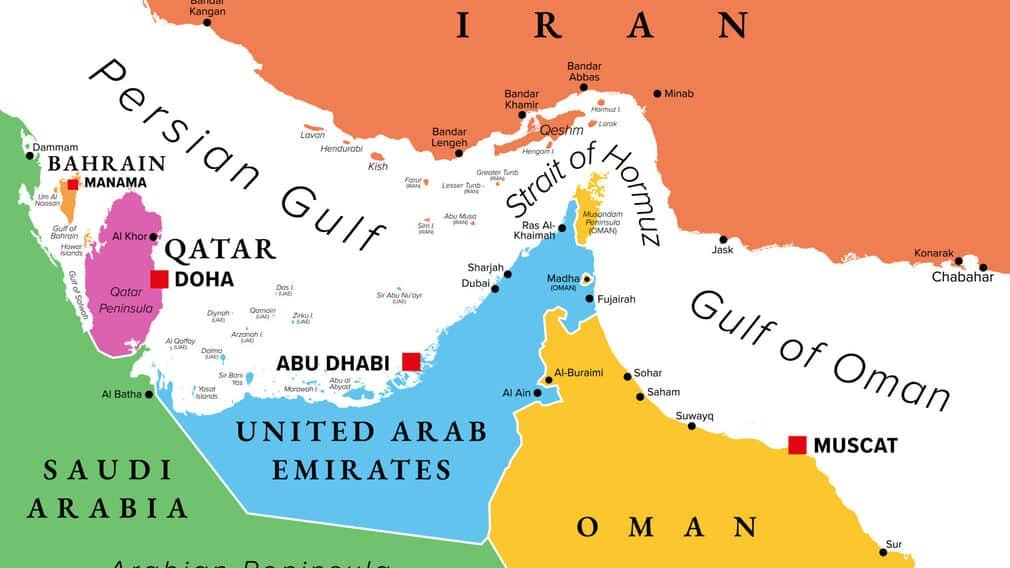
The Strait of Hormuz has become the focal point of a dangerous escalation as reports of Iranian mine-laying operations emerge, prompting the United States to respond with precision strikes against Iranian naval assets, particularly minelayers. On March 10, U.S. CENTCOM announced the destruction of 16 Iranian minelayers and multiple warships.
The Strait of Hormuz, the world’s most critical maritime chokepoint for global energy supplies, has become the epicentre of a major international crisis. In 2024, approximately 20 million barrels per day of total petroleum liquids passed through the Strait—equivalent to about 20% of global consumption and over a quarter of all seaborne oil trade. Furthermore, the Strait is a critical corridor for liquefied natural gas (LNG), with roughly one-fifth of the world’s supply, primarily from Qatar, transiting the waterway.

In a dramatic escalation of hostilities, Iran claimed over the weekend it has initiated offensive mine warfare operations in the strategic waterway, prompting a swift and forceful military response from the United States.
On March 10, U.S. Central Command (CENTCOM) announced that American forces had destroyed 16 Iranian minelaying vessels near the Strait. The crisis has sent shockwaves through global energy markets, raising concerns of a prolonged blockade of a passage through which one-fifth of the world’s daily oil consumption flows.
Is Iran Mining the Hormuz Strait?

Initial assessments indicate that Iran’s mine laying activity is for now limited, with reports suggesting a few dozen mines have been laid in the Strait of Hormuz so far. While this number may appear modest, the psychological and economic impact of even a limited mining operation in such a constrained and critical chokepoint is immense. The mere threat of mines is often sufficient to paralyze maritime traffic, as shipping companies and their insurers become unwilling to risk crew and cargo.
The operation appears to be a deliberate act of asymmetric warfare orchestrated by the Islamic Revolutionary Guard Corps Navy (IRGCN), which shares control of the Strait with Iran’s conventional navy (Artesh). The IRGCN is known for its proficiency in unconventional tactics. This includes a large fleet of small, fast boats capable of deploying mines, swarms of explosive-laden unmanned surface vessels, and an array of shore-based anti-ship missile batteries positioned along the Iranian coastline. U.S. officials noted that Iran was likely using small craft, each capable of carrying up to three mines, for the deployment.
Despite the U.S. strike, estimations suggest that Iran retains considerable capacity to continue and expand its mining operations. Reports indicate that between 80 and 90 percent of Iran’s small boats and minelaying vessels remain intact, giving Tehran the ability to deploy hundreds, if not thousands, of additional mines.
Mine laying: Not just from ships
In addition, Iran is not limited to using surface vessels to deploy mines in the strait. They may deploy mines from trucks via rockets and via submarines too.
Historically, Iran has viewed mine warfare as a potent tool of deterrence and coercion. The deployment of even a few mines, or simply the credible threat of doing so, could effectively function as a blockade by causing maritime insurance rates to skyrocket—deterring most commercial shipping from entering the Gulf and crippling the economies of Arab Gulf states that rely on the waterway for their exports.
CENTCOM Shared Video of New Naval Engagements

The United States responded to Iran’s mining activities with decisive military action and unequivocal political warnings. CENTCOM announced on X that its forces have engaged and destroyed multiple Iranian naval vessels near the Strait of Hormuz. In a public statement accompanied by video footage of the strikes, CENTCOM confirmed that 16 Iranian minelayers were sunk.
The strike targeted a range of Iranian naval assets beyond the minelayers. According to reports, destroyed vessels included a Shahid Soleimani-class catamaran corvette—one of Iran’s most advanced surface combatants equipped with vertical launch missile systems—as well as small fast boats fitted with missiles, a Khadir-class submarine, and small intercept boats. The loss of the Shahid Soleimani-class vessel, if confirmed, represents a significant blow to Iran’s efforts to modernize its naval capabilities and extend its operational reach beyond the Persian Gulf.
President Donald Trump declared that if the mines laid by Iran were not immediately removed, the military consequences for Tehran would be “at a level never seen before.” He emphasized that the U.S. military would employ its most advanced technology and missile capabilities to eliminate any vessel attempting to further mine the Strait, promising to deal with such threats “quickly and violently.”
U.S. Secretary of Defense Pete Hegseth reinforced this message, stating that the United States would not permit the Strait of Hormuz to be “held hostage.” In the context of the wider conflict that has been escalating for nearly two weeks, Secretary Hegseth asserted that a series of U.S. strikes had already rendered Iran’s navy “combat ineffective.”
Lessons from the Russo-Ukrainian War: Drifting Mines and the Black Sea Precedent

The ongoing conflict in the Black Sea has provided a stark and contemporary reminder of the disruptive power of naval mines, offering valuable lessons that resonate strongly in the current crisis in the Strait of Hormuz. Sea mines are a classic weapon of asymmetric warfare: they are relatively cheap to produce, easy to deploy, and highly effective at denying access to vast areas of water. They are a “fire and forget” weapon that can silently wait for years, posing a threat to any vessel that crosses their path.
In March 2022, early in the Russo-Ukrainian War, Russia issued a navigational warning (NAVTEX) claiming that approximately 420 sea mines, allegedly laid by Ukrainian forces near Odesa, had broken free from their anchors during a storm and were drifting freely in the Black Sea. This announcement immediately created a serious threat to all commercial shipping and naval traffic in the region. Shortly thereafter, a mine-like object was discovered and neutralized by the Turkish Navy near the entrance to the Istanbul Strait.
In response to this threat, Türkiye spearheaded the MCM Black Sea Task Group—a trilateral mine countermeasures initiative with Bulgaria and Romania that was formally activated on July 1, 2024.
The primary lesson for the Strait of Hormuz crisis is that ambiguity is a powerful weapon. In a contested environment, definitively assigning blame for a mine detonation can be extremely difficult, providing the aggressor with plausible deniability. The silent and often unseen nature of the threat allows the party that laid the mines to control the narrative, sow fear, and exert immense economic and psychological pressure far beyond the immediate area of deployment.
Author’s Comment
Iran’s mining of the Strait of Hormuz was always an option on the table, even in the pre-war period. The naval mine is a traditional weapon, particularly effective for preventing major naval powers from transiting or utilizing a maritime area. Although it may seem outdated, the Russo-Ukrainian War has demonstrated that mines remain highly effective. However, the careless mining witnessed in that conflict resulted in mines breaking free from their moorings and drifting at sea, threatening everyone—including third-party nations and civilian shipping. As a consequence of these dangerous experiences, the MCM Black Sea initiative was established under Turkish leadership and continues to operate today.
Until now, U.S. naval forces have conducted their strikes against Iranian territory from standoff range, using missiles and carrier-launched air operations. Because the ships remained beyond the effective range of Iran’s anti-ship missiles, there was no significant risk factor. Ballistic missiles proved ineffective against moving targets, and due to the U.S. Navy’s air defense and ballistic missile defense capabilities—combined with Iran’s strategy of targeting missile launchers—no hits were recorded on American naval assets.
However, if the Strait of Hormuz is to be forcibly opened, as has been suggested, and warships are to provide escort protection for commercial vessels, this would require those warships to enter the standoff range of Iranian weapons. They would be exposed to missile threats, kamikaze boat attacks, and—critically—the mine threat.
Despite the U.S. Navy’s formidable capabilities, there is no known robust mine countermeasures force currently deployed in the region. While MCM mission modules have been added to the Littoral Combat Ships, these systems have not yet reached full operational maturity. In addition, should the LCS engage in MCM operations in the Strait of Hormuz, Iran would likely resist the mine clearance activities.
In a narrow waterway like Hormuz, the probability of sustaining casualties during such operations is far from negligible. Consequently, forcibly opening the Strait of Hormuz in a contested environment could change the picture we have seen so far in the war and increase casualties.
Such operations must be analyzed very carefully, and expected casualty rates must be calculated with precision. Warships are considered extensions of national territory; the loss of a warship is perceived as the loss of sovereign soil. The psychological impact is far greater than one might anticipate—much like how the balance in the Black Sea shifted dramatically after Russia lost the cruiser Moskva.
المصدر: اضغط هنا
[ad_2]