منتورع العسكري منصة متخصصة في التحليل العسكري والأمني… رؤية دقيقة، معلومات موثوقة، وتغطية شاملة للقوات المسلحة حول العالم.
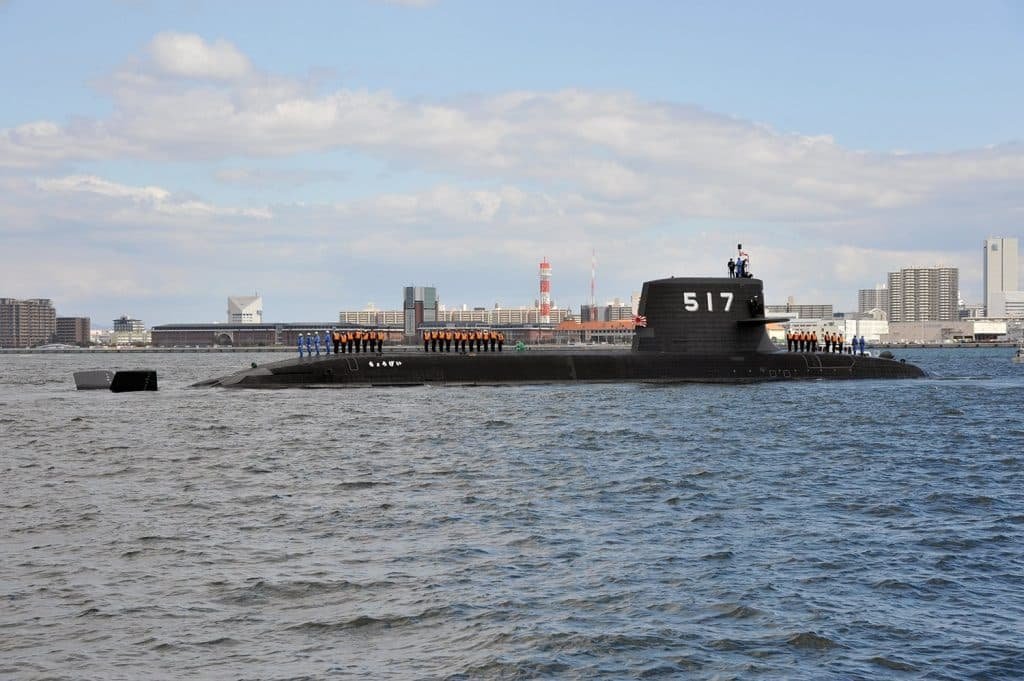
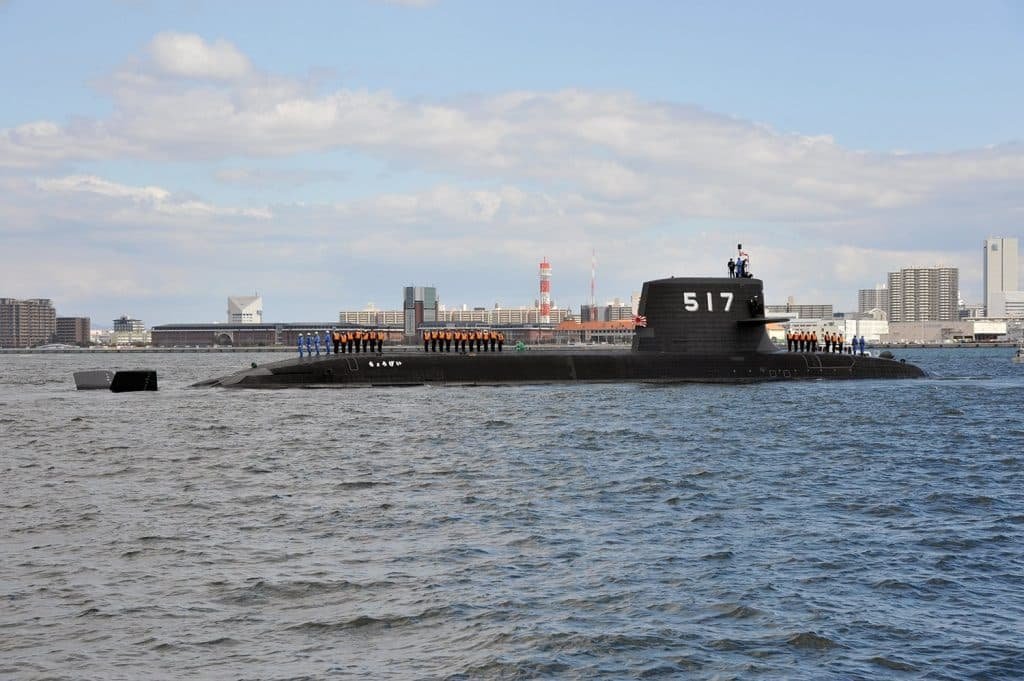
The Japan Maritime Self-Defense Force (JMSDF) has commissioned the fifth of its Taigei-class diesel-electric attack submarines (SSK), which feature improved detection capability and reduced detectability compared with earlier submarines.
Named JS Chogei (with pennant number SS 517), the new Taigei-class boat was inducted into the Submarine Division 2 of Submarine Flotilla 2, which is homeported at the Yokosuka naval base in Kanagawa Prefecture, shortly after being handed over by shipbuilder Mitsubishi Heavy Industries (MHI) at its facility in Kobe City on March 10.
According to the JMSDF, the new submarine has a crew of about 70, an overall length of 84 m, a beam of 9.1 m, a draft of 10.4 m, and a standard displacement of about 3,000 tonnes. It is therefore slightly larger than the earlier Soryu-class submarines, which measure 84 m in length, 9.1 m in beam, have a draft of 10.3 m, and a standard displacement of 2,950 tonnes.
The Taigei-class for the first time has female-only accommodation areas, including living space for up to six women, according to the service.
Chogei means “long whale” in Japanese. The Taigei-class submarines all incorporate “Gei” (whale) into their names, following the “Shio” (tide) and “Ryu” (dragon) series seen in previous JMSDF submarines. “Taigei” itself means “big whale.”
The new submarine, which cost about 68.4 billion yen ($434 million) to build, is powered by a diesel-electric propulsion system generating about 6,000 hp. It has a maximum speed underwater of 20 knots.
Taigei-class submarine features
The Taigei-class features the ZQQ-8 high-performance sonar suite, an upgraded system developed by Oki Electric Industry. It replaces the ZQQ-7 sonar used on the previous Soryu-class submarines and provides improved detection capability.
Earlier Taigei-class boats—from the lead submarine Taigei through the third boat Jingei—are powered by two Kawasaki Heavy Industries 12V25/25SB V-12 diesel engines used as the main propulsion generators.
Beginning with the fourth boat, Raigei, the class introduced the new Kawasaki 12V25/31 diesel engine for the first time. The engine is designed to work with an updated snorkel system that improves power generation efficiency and battery charging performance, particularly for the submarine’s lithium-ion battery system.
Despite the introduction of the new engine, overall performance remains similar, with an output of about 6,000 horsepower and a submerged speed of approximately 20 knots.
The Taigei-class boats are all equipped with lithium-ion batteries in place of lead-acid ones, just like the final two Soryu-class boats for the JMSDF: Oryu (SS 511) and Toryu (SS 512).
GS Yuasa, a Kyoto-based developer and manufacturer of battery systems, provided the lithium-ion batteries for those new submarines. So far Japan is the only country known to have fitted lithium-ion batteries into SSKs, with South Korea expected to be the next country to do so with the second batch of KSS-III (also known as Dosan Ahn Chang-ho)-class submarines sometime in the late 2020s.
The class also employs a new combat management system (CMS) combining advanced integrated sensors, command-and-control, and weapon engagement systems, the Japanese Ministry of Defense said.
In addition, it adopts an enhanced snorkel system to reduce signatures, and a new-generation sonar system based on fiber-optic array technology to enhance detection capability.
Another notable change is the adoption of non-penetrating optronic masts only, eliminating the traditional penetrating periscope. The submarines employ the Optronic Sensor A-type Kai-1, developed by Mitsubishi Electric and Nikon.
Taigei-class SSK weapons
The Taigei-class employs the same torpedo counter-measures system that has been incorporated into the last four Soryu-class boats. It uses Japan’s newest torpedo, which is called the Type 18, succeeding the previous Type 89. The new torpedo features improvements in a number of areas, including propulsion, target detection, and processing.
The class is also capable of deploying the UGM-84L Harpoon Block II anti-ship missile against surface targets. This missile range is 248 km – enough to provide Japan with a “counterattack” capability.
Taigei-class submarine program so far
The lead submarine of the Taigei-class, Taigei (SS 513), was commissioned in March 2022. The second boat, Hakugei (SS 514), entered service in March 2023, followed by the third, Jingei (SS 515), in March 2024 and the fourth, Raigei (SS 516), in March 2025.
The sixth submarine, Sogei, was launched in October 2025 and is currently undergoing outfitting ahead of its planned commissioning in March 2027. Additional boats are also under construction at Japanese shipyards.
In the FY2026 defense budget, Japan’s Ministry of Defense allocated 120.8 billion yen($766 million) for the construction of the 10th Taigei-class submarine.
China’s third aircraft carrier, Fujian, was commissioned on November 5, 2025, giving the Chinese Navy a three-carrier force alongside Liaoning and Shandong. As Beijing expands its carrier operations, the People’s Liberation Army Navy is expected to operate more frequently beyond the so-called First Island Chain — the line of islands stretching from Japan through Taiwan to the Philippines — and into the Western Pacific. The chain includes Japan’s southwestern islands near Kyushu, which form a key gateway to the Pacific. In this environment, Japan’s submarines, often described as the “ninjas of the sea,” are expected to play an important role in monitoring and deterring growing Chinese naval activity.
المصدر: اضغط هنا
[ad_2]