On March 3 and 4, in the presence of Kim Jong Un, North Korea conducted operational tests of its advanced 5,000-ton destroyer Choe Hyon, which sailed under its own power for the first time since April 25, 2025, and was observed with further modifications to its vertical launch system (VLS).
On March 3 and 4, in the presence of Kim Jong Un, the North Korean Navy conducted tests to assess the operational capabilities of its new 5,000-ton destroyer, Choe Hyon (51). The North Korea’s largest and by far its most advanced surface warship, sailed under its own power for the first time since April 25, 2025. During its earlier trial, several weapon launches had been carried out, although the ship had been towed rather than operating independently.
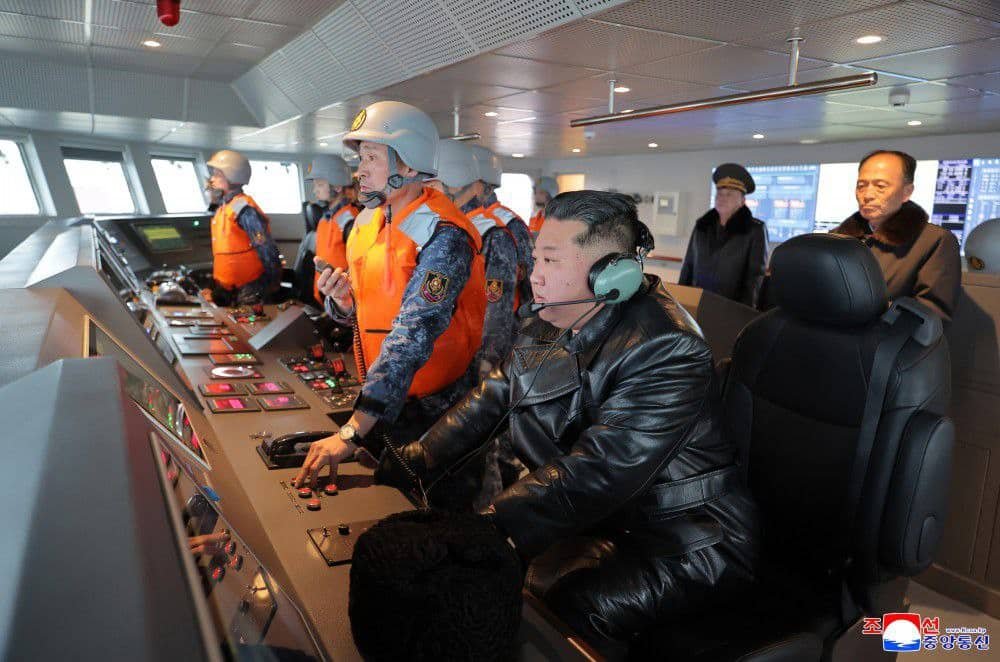
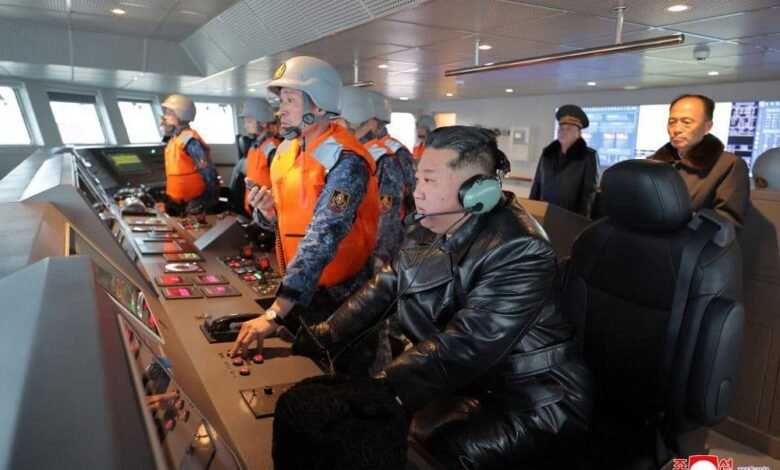
According to North Korea’s official Korean Central News Agency (KCNA), Kim Jong Un inspected the destroyer to observe the crew’s combat and political training and to oversee the shakedown process intended to evaluate the vessel’s operational performance. Accompanying him were Workers’ Party of Korea (WPK) officials, senior military officials and officials from the warship-building sector.
While on board, he reviewed the sailors’ ability to operate the warship and manage its various weapon systems. He praised the crew for their achievements in New Year combat and political training, noting that they had attained the military and technical qualifications required by the Party Central Committee for operating the new-type destroyer.
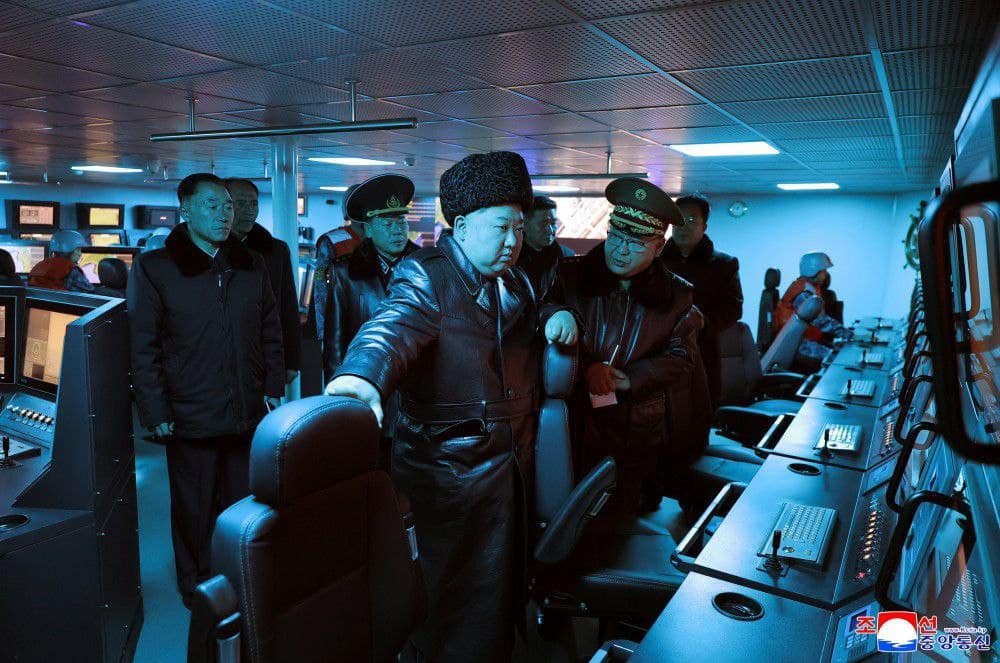
A shakedown cruise was conducted in his presence to evaluate the ship’s maneuverability, with the crew carrying out the exercise confidently under his supervision. Following the trial, Kim Jong Un expressed satisfaction with the results, stating that the vessel met operational requirements and that its control system demonstrated excellent performance.
In remarks during the visit, Kim described the destroyer as a new symbol of the country’s maritime defense capability and said the ongoing trials also highlighted the advantages of its design and the progress made in naval modernization. He outlined plans to significantly strengthen the navy during the current five-year defense development program, calling for the construction of at least two surface warships of this class or a more advanced type each year. Therefore, at least ten such destroyers or larger ones are expected the next five years.
He added that the successful implementation of this plan would rely on the sustained capacity of the national defense industry, which he said already possesses strong research teams and a capable shipbuilding sector. Kim also stressed that the navy’s offensive capabilities, both above and below the water, would expand rapidly and stated that efforts to equip naval forces with nuclear weapons were progressing satisfactorily.


According to Kim , these developments represent a major shift in the country’s ability to defend its maritime sovereignty after decades of limited naval capability. He reiterated that building a powerful navy is a central objective of the current defense strategy and said the five-year plan would transform the structure of the armed forces, ensuring national sovereignty through practical military capability rather than declarations alone.
Destroyer Choe Hyon Tests Its Weapons
On March 4, Kim Jong Un also supervised sea-to-surface strategic cruise missile launches from the warship marking final testing before the warship enters active service. He described the test as a key element in evaluating the destroyer’s operational capabilities. The launch was carried out successfully, and he expressed great satisfaction with the sailors’ high level of readiness to conduct a strategic strike mission. He stated that such a demonstration of power was not only a clear expression of the will to defend national sovereignty with confidence but also a responsible exercise of the country’s war deterrent.


Later that day, he inspected the third Choe Hyon-class destroyer under construction at Nampo shipyard (two other destroyers are currently under construction at Hambuk Shipyard in Chongjin). The visit to both the operational vessel and the construction site served to highlight that the strategic plan of the Party Central Committee, aimed at the gradual and qualitative strengthening of naval forces tasked with carrying out the national defense strategy and maintaining deterrence, was beginning to demonstrate tangible progress.
New Modifications
As Naval News previously reported in October 2025, only a few months after its commissioning on April 25, 2025, the missile destroyer reappeared with significant modifications to its weapon and sensor suites. In its latest appearance, however, the vessel shows far fewer external changes, with the most notable modifications concentrated in the aft VLS section. It is noteworthy how quickly and extensively North Korea has been able to modify the VLS configuration on its 145-meter new destroyer.
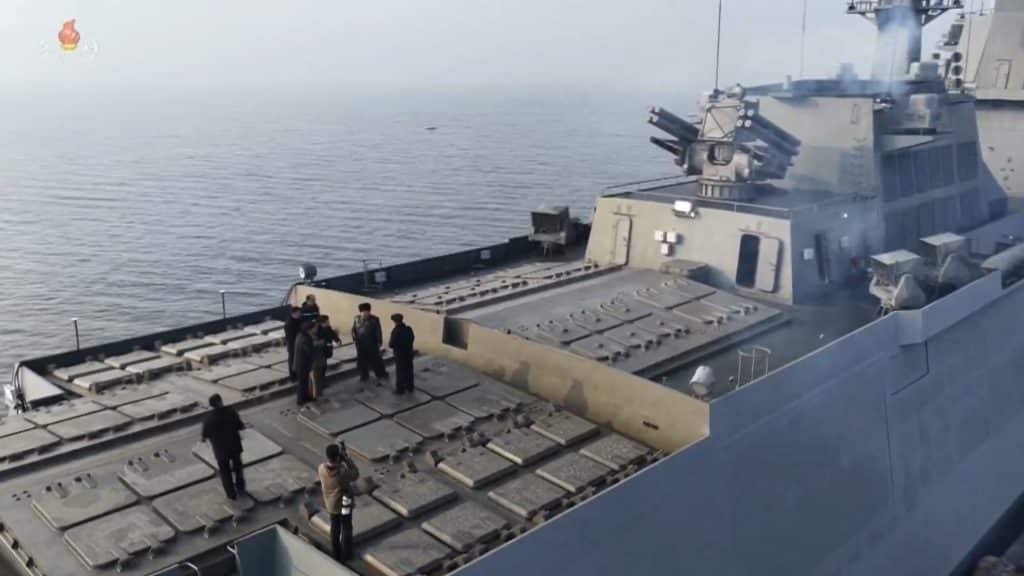
The modification observed at that time involved the superstructure that had previously housed 10 oversized ballistic missile cells. This structure was redesigned and more seamlessly integrated with the adjacent hull, creating a continuous profile and eliminating the port and starboard gaps visible in the earlier configuration. The large cells were replaced by a launcher similar to the one installed forward, likely replicating the bow VLS arrangement with 24 cells. As a result of this redesign, the previously estimated total of 74 VLS cells was reduced to 68.
In its most recent appearance, the vessel also features a further modification: 20 additional cells installed following a hull extension, possibly intended for anti-aircraft missiles after the changes in the forward VLS where the 32 small-diameter launch cells were replaced by 12 larger ones. These 20 new cells are positioned on both sides of the 24-cell launcher identified in October 2025, with ten cells on each side. With these additions, the aft VLS section now contains a total of 64 cells.
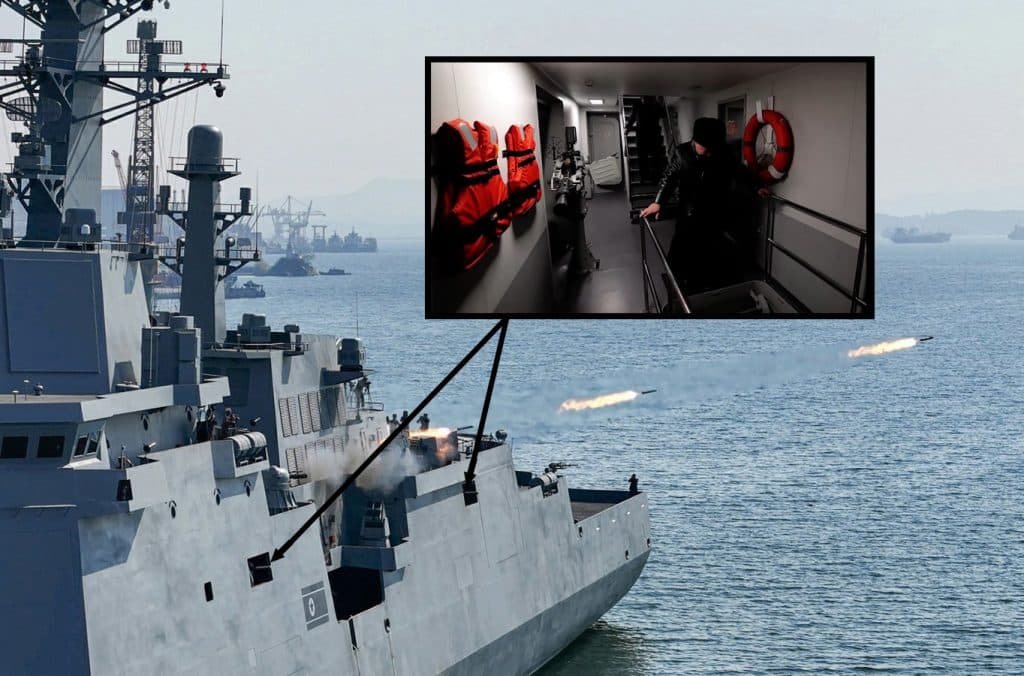
Combined with the 24 cells located forward of the superstructure at the bow, the destroyer now carries 88 vertical launch cells. In addition, the vessel is equipped with eight inclined launchers concealed within the central superstructure, located ahead of the engine exhaust, as well as eight ready-to-fire short-range missiles resembling the Russian Pantsir system. Altogether, this suggests a potential load of up to 104 missiles of various types.
المصدر: اضغط هنا