منتورع العسكري منصة متخصصة في التحليل العسكري والأمني… رؤية دقيقة، معلومات موثوقة، وتغطية شاملة للقوات المسلحة حول العالم.
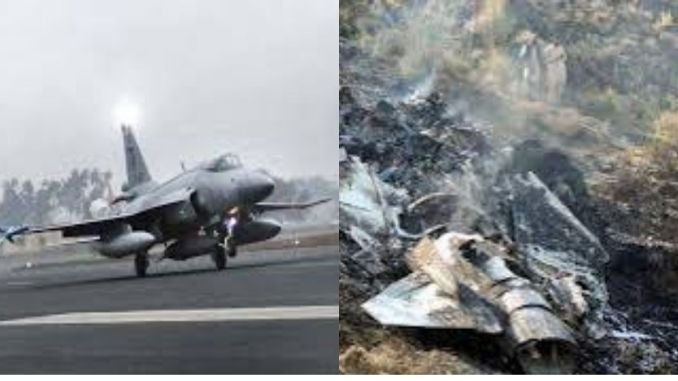
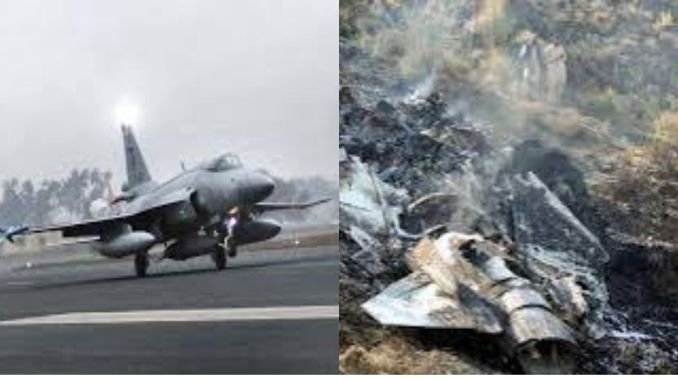

A Pakistani fighter jet crashed in Jalalabad in Afghanistan’s east, the Afghan military and police said on Saturday, after Islamabad launched air strikes on at least three cities in a flare-up of cross-border fighting.
Afghan authorities said air defense units engaged Pakistani jets over Kabul after explosions were reported in the city before sunrise.
On March 1, 2026, Afghan authorities said air defense units opened fire at Pakistan Air Force fighter jets over Kabul after blasts and gunfire shook the capital before sunrise. The engagement marks a new escalation in the 2026 Afghanistan–Pakistan war that began on February 21, 2026. The confrontation comes after Pakistan launched airstrikes in eastern Afghan provinces and Afghanistan announced retaliatory operations along multiple border sectors.
Since the deployment of Sino-Pakistani JF-17 Block III fighters in the Afghan war, the Pakistan Air Force has lost two JF-17 Block III fighter jets in the conflict.
These losses are not direct combat losses, as Afghanistan lacks many anti-air missiles or fighter jets, but they are direct accidents related to the JF-17 fighter aircraft’s quality. Various technical malfunctions included engine fire, fuel pump system failure, radar failure, avionics failure, and structural flaws.
A new problem appeared in the JF-17 fighter: electric, submerged pumps in tanks that maintain pressure and prevent vapour lock, particularly under high-G or low-pressure (high-altitude) conditions, failed in flight, resulting in a crash in Pakistan.
One of the major issues discovered in actual combat was that meters of fuel were delivered to the combustion chamber based on pilot input (throttle) and computer commands (FADEC), allowing an engine to draw fuel from any tank in fighters that failed mid-flight.
The 2026 Afghanistan–Pakistan war began on February 21, 2026, when the Pakistan Air Force conducted airstrikes in Nangarhar, Paktika, and Khost provinces with the stated aim of targeting seven alleged militant camps belonging to Tehreek-e-Taliban Pakistan and Islamic State Khorasan Province in retaliation for attacks in Islamabad, Bajaur, and Bannu. Afghan officials said the strikes hit civilian targets and religious centers and reported 18 civilian fatalities in Nangarhar province, while Pakistan denied targeting civilians and cited militant fatalities. UN figures later confirmed 13 Afghan civilians killed and 7 injured in Pakistani airstrikes, and Afghan authorities also reported 37 Afghan civilians killed and 26 injured during the hostilities.
Equipment available to Afghan forces includes thousands of U.S. military assets captured in 2021, among them Humvee, M1117 Guardian, MaxxPro MRAP, and Oshkosh ATV armored vehicles, alongside small arms such as M4 carbines and M16 rifles, machine guns, grenade launchers, night-vision devices, body armor, and communications systems. For air defense, Afghan units have relied on old Soviet systems inherited from previous governments, including ZU-23-2 23 mm twin-barrel anti-aircraft guns, ZPU-1 and ZPU-2 14.5 mm anti-aircraft guns, DShK 12.7 mm heavy machine guns mounted on technical vehicles, and man-portable air defense systems (MANPADS) such as Strela-2 and 9K38 Igla, where serviceable stocks remain. The Afghan Air Force operates a reduced fleet compared to Pakistan, including a small number of A-29 Super Tucano light attack aircraft, MD-530 helicopters, and transport helicopters, with operations during the 2026 conflict focused on air defense fire and local support missions rather than sustained strike campaigns. Constraints include maintenance capacity, spare parts shortages for missile systems, limited radar coverage, and exposure of fixed depots and headquarters to Pakistani airstrikes.
On the other side, Pakistan’s military forces engaged in the war include the Pakistan Armed Forces with 660,000 active personnel, of whom 560,000 serve in the Pakistan Army, supported by paramilitary formations such as the Frontier Corps in Khyber Pakhtunkhwa and Balochistan. Major ground equipment inventories include more than 6,000 armored fighting vehicles and 4,600+ artillery pieces, enabling sustained fire support and cross-border operations through formations including XI Corps and XII Corps. Political and military leadership associated with the conflict includes President Asif Ali Zardari, Prime Minister Shehbaz Sharif, Chief of Army Staff Asim Munir, and Defense Minister Khawaja Muhammad Asif. The conflict has also involved artillery, air defense units, and coordinated air-ground operations along multiple sectors of the border.
The Pakistan Air Force fields 465 combat aircraft and 260+ helicopters, including 75 F-16 fighters comprising 44 F-16AM/BM Block 15 MLU, 13 F-16A/B ADF, and 18 F-16C/D Block 52+, 149 JF-17 fighters in several blocks, more than 80 Mirage III, 90 Mirage 5, 140 F-7PG interceptors, and at least 25 J-10C on order with expectations rising to 36. It operates airborne early warning aircraft, including Saab 2000 Erieye systems and four ZDK-03 based on the Y-8, aerial refueling via four Il-78MP tankers, and transport assets including 15 C-130 variants, supporting extended-range sorties and coordinated strike packages. A Special Services Wing of 1,200 personnel provides a dedicated air force special operations capability. The disparity in airpower, early warning, and refueling capacity has shaped the operational tempo, enabling repeated cross-border strikes on corps headquarters, ammunition depots, and border posts while Afghan forces concentrated on border engagements and air defense actions over urban centers.
© 2026, GDC. © GDC and www.globaldefensecorp.com. Unauthorized use and/or duplication of this material without express and written permission from this site’s author and/or owner is strictly prohibited. Excerpts and links may be used, provided that full and clear credit is given to www.globaldefensecorp.com with appropriate and specific direction to the original content.
المصدر: اضغط هنا
[ad_2]